

Dry Rosé Wines · Fruity + Elegant
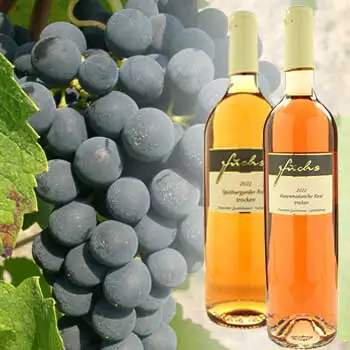
Dry and Off-Dry Rosé Wines – What Is the Difference?
Here you will find high-quality dry and off-dry rosé wines directly from the winery – fruity, elegant and handcrafted in the south of Rheinhessen.
Dry Rosé Wines
These rosés show no or only very little sweetness, as all natural grape sugars have been fermented into alcohol. They are highly versatile companions to food.
Off-Dry Rosé Wines
Off-dry rosé wines are characterised by a very subtle, barely perceptible residual sweetness that gently highlights the fruit notes of the wines. These rosés also pair very well with food.
Of course, alongside rosés you will also find dry and off-dry white and red wines in our range:
Continue browsing: All dry wines · All off-dry wines
How Do Dry and Off-Dry Rosé Wines Taste?
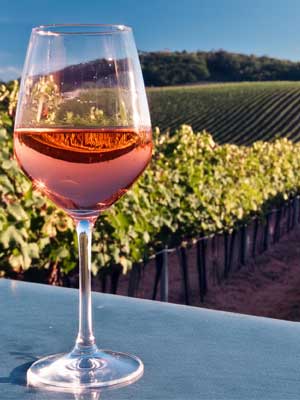
Depending on the grape variety, rosé wines show different levels of fruit expression and aromatic character. The colour tone also varies by variety: the colour spectrum ranges from delicate pink to rich salmon pink.
On the palate, fruity nuances of red and black berries (raspberry, blackberry, strawberry, red and black currant, blueberry) appear, along with cherry and plum notes.
Nuances of cranberry, fig or subtle spicy notes are also possible.
Pinot Noir Rosé dry and the off-dry rosé are delicately fruity wines; their fine aromatics are subtle on the palate.
Further details can be found in the tasting description of each wine.
Enjoying Dry and Off-Dry Rosé Wines
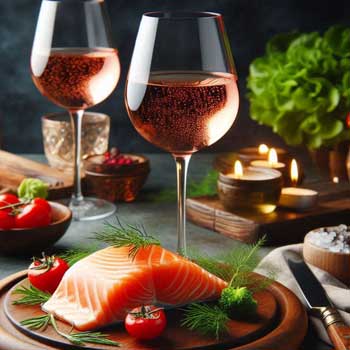
Dry rosé wines are most often chosen as companions to food. Due to their non-existent or very subtle sweetness they pair well with a wide range of dishes.
A large, generously shaped wine glass allows the aromas of rosé wine to unfold best.
Dry Rosé Wines – Classic and Elegant Companions to Food
Dry rosé wines are highly versatile food companions. They pair equally well with light meats, poultry, fish and seafood, pasta or vegetarian dishes, as well as with cheese or a cold supper with bread and cold cuts.
Serving Temperature
Rosés should be served well chilled to allow their fresh, fruity and elegant character to shine. Simply try different temperatures to find what suits your personal taste best.
Which Grape Varieties are Used to Produce Dry Rosé Wines?
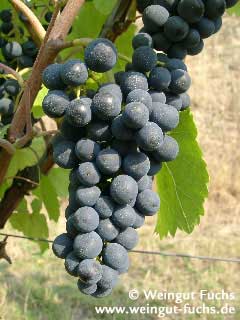
Almost all red grape varieties are suitable for producing rosé wines. Exceptions are particularly intensely coloured varieties such as Dunkelfelder or Cabernet Mitos, whose grapes, when fully ripe, have such dark juice and flesh that producing a rosé wine from them is not possible.
Classic Red Grape Varieties for Dry and Off-Dry Rosé Wines
Pinot Noir, as well as the less widely cultivated Pinot Meunier, are excellent choices for producing rosé. Both grape varieties have dark blue skins, while the flesh inside the berries is light.
Dry and Off-Dry Rosé Wines – Quality You can Taste
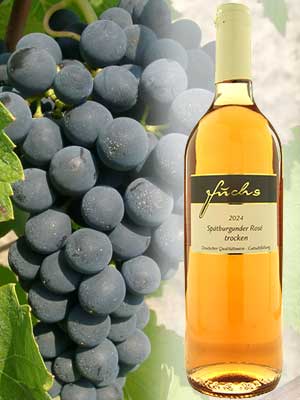
Our dry rosé wines are German quality wines, cultivated, vinified, matured and bottled with great care:
- from perfectly healthy, very ripe grapes
- pressed quickly and gently
- only crystal-clear filtered must is fermented
- slow, temperature-controlled fermentation at low temperatures
- extended ageing on the lees to develop aromatic finesse
Quality Assurance and Control
The quality of a rosé wine does not depend on whether it is dry or sweet. In dry rosé wines, all natural grape sugars ferment completely into alcohol, while in off-dry wines a very subtle natural residual sweetness remains.
Certified Quality
- Only flawless dry and off-dry rosé wines with varietal-typical aromatics are bottled.
- After the required laboratory analysis, the wines undergo the official quality wine examination by the Chamber of Agriculture.
- Only after successfully passing this examination may the rosé wines be labelled “German Quality Wine”.
Discover the Finest Dry and Off-dry Rosé Wines Directly from the Winery
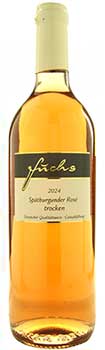 # 172(8)
Pinot Noir Rosé Dry · Rosé Wine
Spätburgunder · 12,5% vol · Rheinhessen · 2026
Vintage 2026 available in December
fruity, crips rosé wine with very gentle acidityVegan
8,20 EUR
(10.93 EUR/l)Price per bottle (0.75 l)
incl. 19% VAT plus shipping feesPinot Noir Rosé Dry
Nutritional Values + Ingredients
100 ml contain on avarage Calorific value 306 kJ (73 kcal) Carbohydrates 1.5 g of which sugar 0.6 g Contains negligible quantities of fats, saturates, proteins and salt. Ingredients: grapes, saccharose, antioxidants: sulfites, bottled in a protective atmosphere.
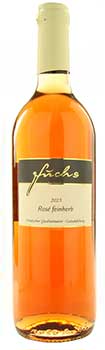 # 3(10)
Rosé Off-Dry · Rosé Wine
Roséwein-Cuvée · 11,5% vol · Rheinhessen · 2026
Vintage 2026 available in December
elegant rosé wine of fine fruitiness and mild acidityVegan
7,20 EUR
(9.60 EUR/l)Price per bottle (0.75 l)
incl. 19% VAT plus shipping feesRosé Off-Dry
Nutritional Values + Ingredients
100 ml contain on avarage Calorific value 320 kJ (77 kcal) Carbohydrates 2.3 g of which sugar 1.3 g Contains negligible quantities of fats, saturates, proteins and salt. Ingredients: grapes, saccharose, antioxidants: sulfites, bottled in a protective atmosphere.
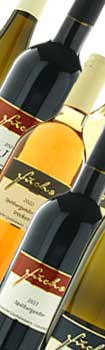 # 302(4)
Wine Gift and Tasting Package “Dry Wines”
free shipping in Germany
6 different dry wines, white –and red54,00 EUR
(12.00 EUR/l)Free shipping within Germany
Price incl. 19% VATWine Gift and Tasting Package “Dry Wines”
Nutritional Values + Ingredients
2025 Sauvignon Blanc Off-Dry
Content 0.75 l · Alcohol 11.5% ABV · German Quality Wine · Pfalz · Estate-bottled
100 ml contain on avarage Calorific value 359 kJ (86 kcal) Carbohydrates 2.3 g of which sugar 1.2 g Contains negligible quantities of fats, saturates, proteins and salt. Ingredients: grapes, antioxidants: sulfites, bottled in a protective atmosphere.
2025 Pinot Blanc Dry
Content 0.75 l · Alcohol 12.5% ABV · German quality wine · Rheinhessen · Estate bottled
100 ml contain on avarage Calorific value 308 kJ (74 kcal) Carbohydrates 1.4 g of which sugar < 0.5 g Contains negligible quantities of fats, saturates, proteins and salt. Ingredients: grapes, saccharose, antioxidants: sulfites, bottled in a protective atmosphere.
2025 Chardonnay Dry
Content 0.75 l · Alcohol 14.5% ABV · German Quality Wine · Rheinhessen · Estate-bottled
100 ml contain on avarage Calorific value 348 kJ (84 kcal) Carbohydrates 1.2 g of which sugar < 0.5 g Contains negligible quantities of fats, saturates, proteins and salt. Ingredients: grapes, antioxidants: sulfites, bottled in a protective atmosphere.
2025 Pinot Noir Dry
Content 0.75 l · Alcohol 12% ABV · German Quality Wine · Rheinhessen · Estate-bottled
100 ml contain on avarage Calorific value 297 kJ (71 kcal) Carbohydrates 1 g of which sugar < 0.5 g Contains negligible quantities of fats, saturates, proteins and salt. Ingredients: grapes, antioxidants: sulfites, bottled in a protective atmosphere.
2024 Fuchs Cuvée «J» Dry
Content 0.75 l · Alcohol 13% ABV · German quality wine · Rheinhessen · Estate-bottled
100 ml contain on avarage Calorific value 329 kJ (78 kcal) Carbohydrates 1 g of which sugar 0.1 g Contains negligible quantities of fats, saturates, proteins and salt. Ingredients: grapes, saccharose, antioxidants: sulfites, bottled in a protective atmosphere.
2023 Fuchs «Extra» Dry
Content 0.75 l · Alcohol 14% ABV · German quality wine · Rheinhessen · Estate-bottled
100 ml contain on avarage Calorific value 350 kJ (84 kcal) Carbohydrates 1.4 g of which sugar 0.3 g Contains negligible quantities of fats, saturates, proteins and salt. Ingredients: grapes, antioxidants: sulfites, bottled in a protective atmosphere.
 # 9999
Gift Voucher
Gift voucher for all products of Weingut Fuchs, redeemable in the online-shop
Choose any value from € 25from 25,00 EUR
Download after payment
Why Fuchs-Wines?
Our customers rate delivery, packaging and service 4.95 out of 5 (720 reviews).
Made in Rheinhessen
- Traditionally hand-crafted wines.
- Classics + rarities.
- Genuine. Individual. Authentic.
Top Wine from the Vintner
- Cultivated in the winery.
- From the winery straight to you.
- Voluntary 30-Day Return Policy.
Fast + Secure Shipping
- Shipping with DHL.
- Tracking included
- Delivery within a few days
FAQ – Frequently Asked Questions about Dry Rosé Wines
What is a dry rosé wine?
A dry rosé wine contains no perceptible residual sweetness. It is made from red grapes and is characterised by a clear, non-sweet taste.
Is rosé dry or sweet?
Rosé wines can be made in styles ranging from completely dry to very sweet. Dry rosé wines contain no perceptible sweetness.
What do dry rosé wines taste like?
Dry rosé wines taste fresh, clear, and well balanced. The aromas are at the forefront, without sweetness shaping the flavour.
Which foods pair well with dry rosé wines?
Dry rosé wines pair well with light dishes, vegetables, fish, salads, and summery cuisine. They are versatile companions for many meals.
How can you recognise a dry rosé wine when buying?
Clues include terms such as “dry” as well as very low or absent residual sugar indicated in the wine description.