

Sweet Red Wines · fruity + tasty
You love sweet red wines? Then you know exactly what you enjoy—and you are in the right place.
What are Sweet Red Wines?
Sweet red wines are wines in which the grapes’ natural sugars are not fully fermented into alcohol. As a result, they have a pronounced natural sweetness and taste fruit-forward, round and full-flavoured.
Whether you enjoy them on your own or share them in good company, sweet red wines have been growing in popularity for years—despite all the “experts” who insist everything should be dry.
Sweet or Semi-Sweet Red Wines—Which are Sweeter?
Both wine styles show a noticeable sweetness. Wine law, however, distinguishes them by their level of residual sugar:
Semi-sweet red wines contain slightly less sweetness than sweet red wines.
If you would like to choose specifically by sweetness level, you will find an overview of all semi-sweet wines and all sweet wines here.
How do Sweet Red Wines Taste?
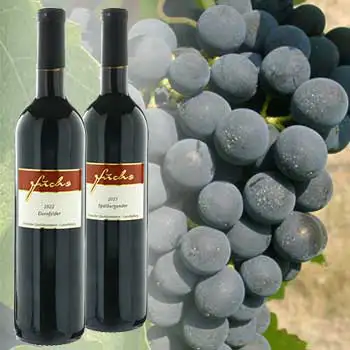
Our sweet red wines are distinctly fruity and characterised by soft, ripe tannins. Depending on the grape variety, their colour ranges from the ruby red of Pinot Noir to the deep, dark red of Dunkelfelder.
Semi-Sweet + Sweet Red Wines From Our Own Vineyards
Here you will find all non-dry red wines from our own vineyards, which we have deliberately crafted with natural residual sweetness.
Typical Aromas and Style of Sweet Red Wines
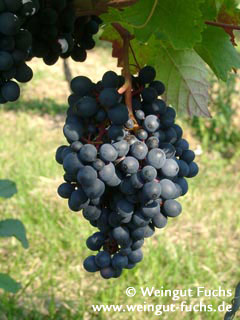
for Dunkelfelder red wine with
fruity wild-berry notes
What all of these red wines have in common is their pleasant, natural sweetness derived from the grapes. It highlights the varietal character of each grape variety, allowing fruity and spicy notes to appear clearly and defined.
Depending on the grape variety, the wines differ noticeably in aromatic profile, tannin structure and colour intensity. Typical fruit aromas include cherry, black currant, raspberry, blackberry and blueberry, complemented by notes of plum, fig or subtle spicy nuances.
Tannins and Texture
Sweet red wines are characterised by ripe, softly integrated tannins. Tannins play a decisive role in how a red wine feels on the palate. Well-balanced tannins create a smooth mouthfeel and also influence how sweet a wine is perceived.
Which aromas dominate depends primarily on the grape variety. Details can be found in the individual tasting notes.
Semi-Sweet and Sweet Red Wines—Technical Classification
The terms “semi-sweet” and “sweet” are clearly defined under EU wine law and refer exclusively to the level of residual sugar:
- Semi-sweet: 18–45 g/l residual sugar
- Sweet: more than 45 g/l residual sugar
There is virtually no upper limit to sweetness: an intensely sweet red dessert wine can easily contain well over 100 g/l of residual sugar.
Semi-sweet red wines at the upper end of the range are often perceived as “sweet” in taste. As with white wine, perception is highly individual. What matters is not residual sugar alone, but the interaction between sweetness, acidity and tannins. In red wines in particular, tannins have a strong influence on how sweetness is perceived.
In everyday language, terms such as “sweet”, “semi-sweet”, “mild” and “easy-drinking” are therefore often used interchangeably, depending on personal taste.
Enjoying Semi-Sweet and Sweet Red Wines
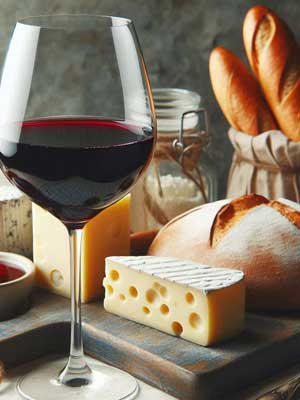
These red wines are true wines for enjoyment—perfect as a stand-alone drink, enjoyed simply for the pleasure of their flavour. Whether during a relaxed evening in front of the television, a get-together with friends, with music and/or a good book—once opened, these wines invite you to linger.
A large, generously shaped wine glass gives the red wine enough space to unfold its flavours.
It Cannot Always be Dry: Sweet Red Wines with Food
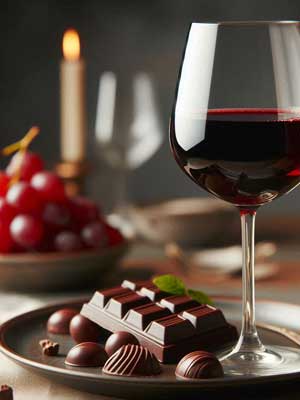
Of course, these wines can also be enjoyed with food. Semi-sweet and sweet red wines pair well with many dishes, especially roasted meats, richly seasoned goulash or sliced meat dishes, grilled or smoked meats, cheese, as well as chocolate- or nut-based desserts and pastries.
Serving Temperature
Semi-sweet and sweet red wines show at their best at around 16–18 °C. If you prefer, they can also be lightly chilled—what matters most is what tastes best to you.

Decanting Semi-Sweet Red Wines
To allow the wine to “breathe”, we recommend opening the bottle well before serving. Carefully decanting the wine into a carafe increases contact with air and supports the development of its aromas. Any natural sediment will settle at the neck of the bottle during careful decanting.
Which Grape Varieties are Used for Sweet Red Wines?
The residual sweetness of a red wine does not depend on the grape variety, but on fermentation and bottling. In principle, any red grape variety can be vinified as sweet or dry. Some varieties, however, produce particularly distinctive results when made in a semi-sweet or sweet style.
Classics and Rare Varieties
Besides classic grape varieties such as Pinot Noir, our range includes several rare varieties that offer welcome variety and distinctive flavour experiences in red wine enjoyment.
Among the less commonly grown grape varieties from which we produce semi-sweet or sweet red wines are:
- Dunkelfelder, very dark and intensely fruity
- Regent, a fruit-forward modern variety
- Moscato Rosa, a rare speciality with a spicy rose-like bouquet
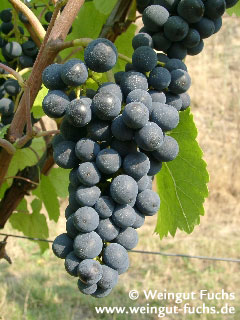
a variety with dark skins
and light-coloured flesh
Colour Spectrum of Sweet Red Wines
Whether a red wine appears ruby red or deep dark red depends on how intensely the berries of its grape variety are coloured. The natural colour intensity of sweet red wines therefore varies greatly depending on the variety.
Ruby-Red Sweet Red Wines
Red grape varieties with dark skins but light juice and pale flesh produce wines with a clear, attractive ruby-red colour.
Deep Dark-Red Sweet Red Wines
Red grape varieties with dark, fully pigmented flesh and dark juice produce particularly colour-intense wines, often appearing almost blue-black in colour:
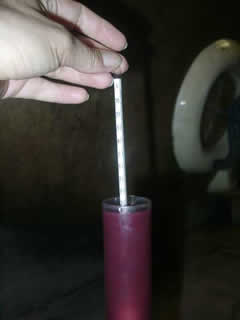
of a red wine using a saccharimeter
How Do Sweet Red Wines Become Sweet?
First of all: No, sweet red wines are not made by adding sugar. Their sweetness comes exclusively from the grapes’ natural sugars.
There are two common methods used to produce sweet wines. Let us take a look in the cellar:
- Stopping fermentation: Fermentation is halted by cooling and filtration once the desired level of sweetness has been reached.
- Sweet reserve: A portion of the grape must is cooled and stored before fermentation and added back to the fully fermented wine shortly before bottling.
We prefer working with sweet reserve, as it allows the wines to mature longer on the lees and enables very precise adjustment of the sweetness level.
Quality of Sweet Red Wines
Our red wines with residual sweetness are German quality wines. We produce them with the same care as our dry red wines:
- from fully ripe, healthy grapes
- gently pressed with minimal pressure
- fine pre-filtration for crystal-clear must
- slow, temperature-controlled fermentation
- extended ageing on the lees to develop aroma
Quality Assurance
Residual sweetness is not a question of quality, but of style. A pleasant side effect of sweet red wines is their often slightly lower alcohol content at the same initial must weight.
How We Ensure Quality
- Only fault-free wines with varietal character are bottled.
- After mandatory analysis, samples are submitted for the Chamber of Agriculture’s official quality testing.
- Only after passing this test may the wines be labelled “German Quality Wine”.
Discover Fine Semi-Sweet and Sweet Red Wines Directly from the Winery
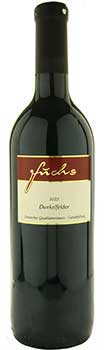 # 103(35)
Dunkelfelder Sweet · Red Wine
Dunkelfelder · 9% vol · Rheinhessen · 2025
velvety, powerful and very fruity red wine of extraordinary deep dark red colour
Vegan
9,20 EUR
(12.27 EUR/l)Price per bottle (0.75 l)
incl. 19% VAT plus shipping fees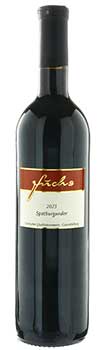 # 104(43)
Pinot Noir Sweet · Red Wine
Spätburgunder · 9,5% vol · Rheinhessen · 2024
fiery, fruity and very sweet red wine of beautiful ruby-red with very gentle acidity
Silver Medal AWC Vienna 2025Vegan
8,20 EUR
(10.93 EUR/l)Price per bottle (0.75 l)
incl. 19% VAT plus shipping fees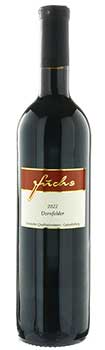 # 108(50)
Dornfelder Semi-Sweet · Red Wine
Dornfelder · 10,5% vol · Rheinhessen · 2025
powerful and very sweet red wine of deep dark red colour and expressive fruitiness
Vegan
7,50 EUR
(10.00 EUR/l)Price per bottle (0.75 l)
incl. 19% VAT plus shipping fees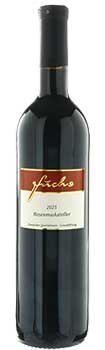 # 114(12)
Moscato Rosa Sweet · Red Wine
Rosenmuskateller · 10,5% vol · Pfalz · 2025
fruity red wine with floral bouquet and expressive flavour and sweetness
Vegan
9,80 EUR
(13.07 EUR/l)Price per bottle (0.75 l)
incl. 19% VAT plus shipping fees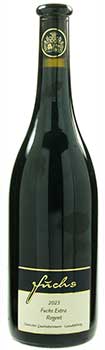 # 112(13)
Fuchs Extra Regent Noble Sweetness · Red Wine
Regent · 9% vol · Rheinhessen · 2023
deep dark red dessert wine of expressive sweetness, pressed of fully ripe grapes of ‘Regent’
14,90 EUR
(19.87 EUR/l)Price per bottle (0.75 l)
incl. 19% VAT plus shipping fees # 303(27)
Wine Gift and Tasting Package “Sweet Wines”
free shipping in Germany
6 different sweet wines, white – rosé – red56,30 EUR
(12.51 EUR/l)Free shipping within Germany
Price incl. 19% VAT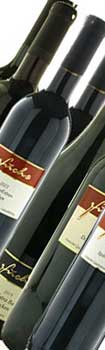 # 305
# 305Wine Gift and Tasting Package “Red Wines”
free shipping in Germany
6 different red wines from very dry to very sweet57,80 EUR
(12.84 EUR/l)Free shipping within Germany
Price incl. 19% VAT
Why Fuchs-Wines?
Made in Rheinhessen
- Traditionally hand-crafted wines.
- Classics + rarities.
- Genuine. Individual. Authentic.
Top Wine from the Vintner
- Cultivated in the winery.
- From the winery straight to you.
- Voluntary 30-Day Return Policy.
Fast + Secure Shipping
- Shipping with DHL.
- Tracking included
- Delivery within a few days
Frequently Asked Questions About Sweet Red Wines
Which red wines are considered sweet?
Sweet red wines are red wines with a clearly perceptible, natural sweetness from the grapes.
How can you recognize a sweet red wine?
Sweet red wines taste soft and fruit-forward, without pronounced dry bitterness. Labels such as “sweet” or “semi-sweet” provide helpful guidance.
What does “semi-sweet” mean for red wine?
“Semi-sweet” refers to red wines with noticeable sweetness, but less sweetness than fully sweet red wines.
Are semi-sweet and sweet the same?
No. Legally, the terms differ by sweetness level: semi-sweet wines contain slightly less residual sugar than sweet wines.
Why does a sweet red wine sometimes not taste sweet?
Tannins and acidity influence how sweetness is perceived. In red wines, ripe tannins in particular can noticeably soften the impression of sweetness.
Does sweet red wine have less alcohol?
Often, yes. Since not all of the grapes’ natural sugar is fermented, sweet red wines frequently have a slightly lower alcohol content than dry red wines.
How should sweet red wine be stored?
Sweet red wine should be stored in a cool, dark place, ideally lying down. Stable temperatures and protection from light are essential.